
A Love Letter to the Road Roller: The Unsung Hero of Smooth Roads
They are the big, slow-moving, rumbling machines that work on construction sites. People often forget about them, but they work with a patient, ground-shaking determination. We’re stopping today to admire the powerful road roller, the machine that literally makes every smooth trip possible.
What is a Road Roller, Exactly?
A road roller, also known as a steamroller (an old-fashioned term from when they were powered by steam), is a vehicle that compacts things. People often think that its main job is to flatten cartoon characters, but that’s not true. Its main job is to compress soil, gravel, asphalt, or concrete.
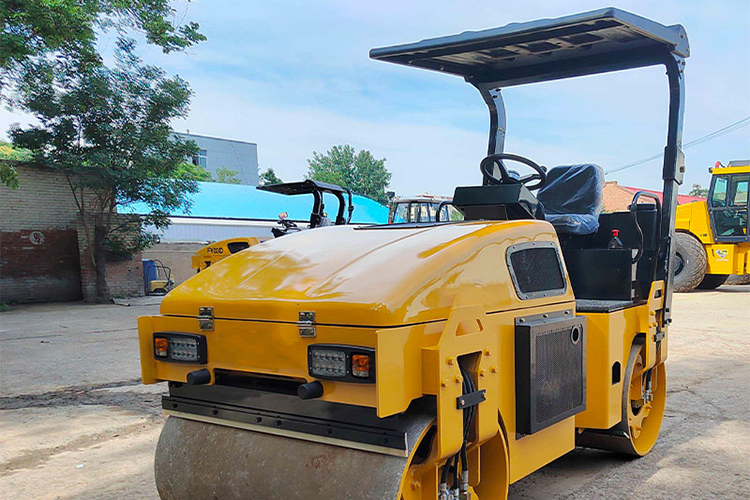
This compaction is very important. It gets rid of air pockets, makes the material denser, and makes a stable, long-lasting, and level surface for roads, foundations, and airfields.
The Main Point: Why Compaction is the Best
Think about how easy it would be to build a road by just pouring asphalt. It would be weak and likely to break, shift, and form potholes after the first rain or heavy truck. A road roller uses a lot of static weight (its mass) and sometimes dynamic force (vibration or oscillation) to push those materials together. This process:
Increases Load-Bearing Capacity: Makes the surface strong enough to handle traffic.
Stops Settlement: Stops future sinking or changing shape.
Less Water Seepage: A compacted surface lets less water through, which stops frost heave and water damage.
Not All Rollers Are the Same
If you walk by a big construction site, you might see different kinds of these animals, each with its own job:
Vibratory Rollers: The most common type these days. They have one or two big steel drums that vibrate at a high frequency. This sends shockwaves into the material, which makes it more compact and deeper. The operator can usually change the amplitude and frequency for different types of materials.
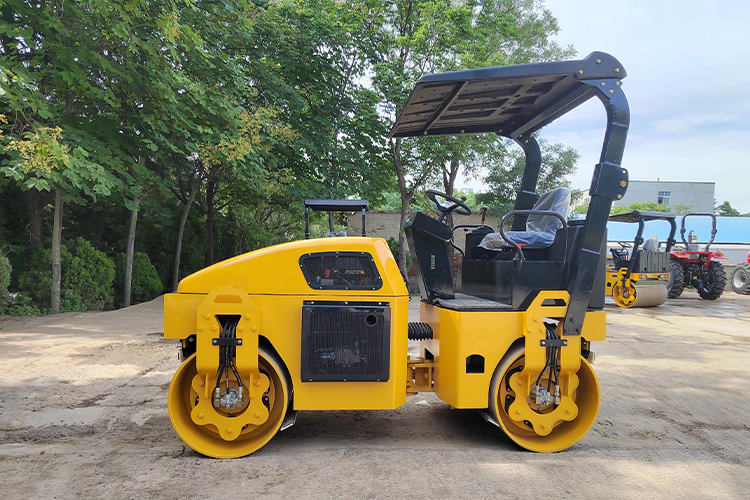
Tandem rollers have two drums, one in the front and one in the back. Both of them usually vibrate. They are the stars of paving asphalt, giving the top layers a smooth, sealed finish.
Pneumatic-Tired Rollers (PTRs): These have a row of rubber tires instead of steel drums. The tires are great for compacting soil and gravel bases or finishing asphalt without leaving drum marks because they are flexible and can be kneaded.
Sheepsfoot Rollers: Have “feet” that are either rectangular or round. These people know a lot about soil, especially clay and other cohesive soils. The feet go deep and compact the ground in layers from the bottom up.
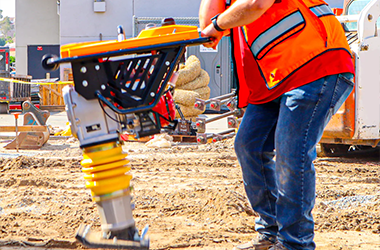
Walk-Behind Rollers: The small, pedestrian-operated types. Great for filling in trenches, small patios, and sidewalks.
Modern Marvels: Tech on the Move
Road rollers today are not at all simple. They are full of technology:
GPS and Compaction Monitoring: Sensors in the drum measure stiffness in real time and show a “pass map” on the operator’s screen. Blue areas need more rolls, but green areas are just right. This makes sure that the compaction is even and that no effort is wasted.
Oscillation is a more advanced type of vibration in which the drum moves slightly from side to side. It works great for compacting near walls or bridges without shaking up nearby buildings in a bad way.
Eco-Friendly Drives: More companies are making hybrid and electric rollers, which use less fuel, make less noise, and produce fewer emissions. This is great for projects in cities.
A Ballet for Operators
It takes skill to drive a road roller. It takes a lot of patience and skill. To get the best compaction without hurting the mat, the operator needs to control the speed, direction, and vibration settings. They work closely with the paver, following a very specific overlapping pattern to make sure that no spot is missed. It’s a slow, planned dance that leads to perfection.
The Bottom Line
When you’re driving on a newly paved highway or landing a plane on a smooth runway, take a moment to think about the road roller and its operator. It’s a machine with pure, useful power that turns loose aggregate into the solid, dependable infrastructure that our modern world needs.
It’s not the fastest or most impressive machine on the site, but it does a lot of hard work that makes our trips smoother.