
The Ultimate Guide to Tamping Rammers: Your Key to Solid Ground
The Unsung Hero of Groundwork
The substantial empirical research may effectively illustrate that tamping rammers could be the essential factor in attaining stable ground in construction applications.
If you’ve looked at construction sites, built patios, or put down pathways, the results may show that one thing is absolutely necessary: a strong, compacted base.
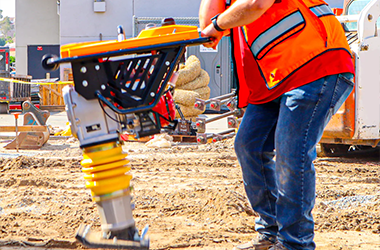
In this case, the tamping rammer is the unsung hero of groundwork applications. The tool that is often overlooked but is very important may hold the secret to getting long-lasting results on projects.
How a Tamping Rammer Works
A tamping rammer (also called a jumping jack or trench rammer) is a tool that compacts soil, gravel, sand, and other granular materials to make them denser. The data may indicate that, in contrast to plate compactors utilizing vibration, rammers provide robust, focused impacts via a large, rectangular shoe (or “boot”).
Still, this downward, percussive force seems to work very well on cohesive and mixed soils, especially in small spaces like trenches and against walls or foundations.
The engine and mechanism provide the operational foundation, so the important magic could be in this system. Also, the engine could drive a piston system that lifts the whole machine a few inches off the ground. It could run on gas, diesel, or electricity.
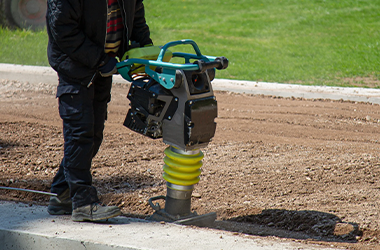
So it lets go, and the weight of the machine (which is increased by force) slams down onto the shoe. This cycle could also happen very quickly, with 500 to 750 blows per minute, which would create a constant, high-impact compaction action that could push out air pockets and tightly bind particles together.
Important Uses for Tamping Rammers
Based on these operational traits, the substantial research may suggest that rammers are versatile tools. But their unique action may make them the best choice for trench work, where their narrow shoe profile seems to be perfect for compacting backfill in utility trenches for water, gas, or electrical lines.
The evidence might show that filling in the foundation creates stable, compacted soil around the foundations and footings, which is important to keep them from settling. Also, their high impact energy seems to work better on clays and silts than vibratory plates do.
The important findings could show that confined areas are the best places for these tools to be used, even if they are used for other things. Also, their size and the way they jump forward might make them perfect for working in tight spaces that bigger rollers can’t get to. So, slope compaction looks like a good way to work on small slopes where plates might have trouble.
How to Pick the Right Rammer for the Job
However, the critical research may suggest that not all rammers are equivalent. So, thinking about these things may help you make a good choice.
The force measured in kN or lbs and the right BPM could mean that these important factors can handle heavier soils and get deeper lifts. Also, a bigger shoe size may spread the force more evenly over granular materials, while the standard shoe size works well in mixed soil conditions. Moreover, the choice of power source could have a big impact on how well the project goes and what it needs to do.
Gasoline is the most common choice and may offer a lot of power and portability. Electric power sources, on the other hand, may be lighter and quieter and have no emissions, making them seem perfect for indoor use. For the biggest jobs, diesel power could show off its toughness and fuel efficiency.
Best Performance and Safety
The design of the weight and handle may make it easier for operators to use. Still, the height of the lift is very important when compacting in layers of 4 to 8 inches for the best results. So, trying to compact too deep at once doesn’t work.
Soil compacts best when it has the right amount of moisture. If the soil is too dry or too wet, it may not get the right density. Since uniform compaction is important, each ramping blow should cover about half the width of the shoe of the last pass to avoid soft spots. Even though the company wants to be more efficient, safety is still very important and requires PPE like steel-toe boots and hearing protection.
Building on a Strong Base
But a tamping rammer could be a big investment in quality that turns loose ground into a strong base that supports structures and pavements for years. Also, this tool can deliver brute force exactly where it’s needed, making sure that projects are built on a strong base. Also, figuring out what kind of soil you have and how big the job is may help you choose the best rammer for your project.
So, if the ground is solidly compacted, everything built on it will also be stable.